 Premarital skill building: what’s that?
When my clients get engaged, straight couples usually assume that they could benefit from polishing up their relationship/communication skills. Ironically, LGBTQ couples seldom think about this. I guess we haven’t (yet) had the cultural support that comes from decades of preparing for successful marriages.
When you’re engaged, it’s usually very exciting. You visualize a life with your fiancé and how great it’s all going to be. Excellent! Good start, but how do you nurture that positivity? What can you do to help that joy last?
Successful marriages aren’t usually based on common interests or physical attraction (although those certainly don’t hurt); they’re based on what I call the Three Musketeers of: mutual respect, commitment to the relationship and deep, underlying friendship.
Notice that I didn’t say “love”. Love is great, but love can fade awfully fast in the face of trouble. While it sure feels good to imagine the happiness you and your fiancé will (hopefully) experience, it’s smart to anticipate conflicts and power struggles too…’cause they’re gonna happen. It’s also smart for couples to get better at working through problems and conflicts. Here are 7 steps you can take to help make your marriage the best it can be:
(1) Define the marriage you want. Talk with your fiancé not only about the ceremony and the honeymoon – the fun stuff – but how you envision your life together and what’s important to each of you (financial security, adventure, great sex, travel, owning your own home, having kids). Plan for the good stuff and anticipate what obstacles may stand in your way. This leads me to…
(2) Anticipate problems: Most of us don’t want to go there. We just hope that problems don’t happen to us. If only. No matter who we marry, it won’t always go smoothly. When I work with couples, I help them identify the most-likely potential problem areas and to come up with strategies to work with them when they raise their ugly little heads.
(3) Learn conflict resolution skills: there are ways to talk about hard stuff that work well and ways that will totally piss your wife/husband off. You can escalate an argument or ground it in reality. You and your wife/husband can read a book, go to a workshop for couples or get some couple’s counseling to find out ways to talk about difficult emotions without hurting each other.
(4) Understand communication styles: if you’re an avoider and your husband/wife is a confronter, learn how to work with each other. Avoiders hope that problems just magically go away (they rarely do) and confronters are often too aggressive in trying to resolve differences. Ironically, avoiders and confronters can each learn a lot from each other. This is one benefit of opposites attracting: your wife/husband can teach you a lot (if you’re open to hearing it).
(5) Clarify financial vagueness: money becomes a big problem for many couples and it often isn’t talked about until it hits crisis proportions. Before your marriage, talk with your fiancé about how each of you likes to spend money and how you feel about saving, making a budget, using credit cards, acceptable amounts of debt, retirement, buying a home…stuff like that.
(6) Clean up junk from your past: we all have junk from past relationships and from our less-than-perfect families. Talking about it with your fiancé is the first step in being willing (and able) to clean it up. For example, I worked with a gay couple where one of the guys was raised in a family that spoke loudly and with a lot of emotion. He was used to that. His husband was raised in a family where a raised voice meant big trouble. Uh-oh…
(7) Build a support network: it’s not a good idea to have your husband/wife be your “everything”. It sounds romantic, but it’s unwise. No one can be everything to anyone. We need friends to vent to and people in our lives to meet our needs when our wife/husband cannot.
Learning these 7 skills will greatly improve the odds of your upcoming marriage being as happy as possible (they work well for unmarried couples too). If you want more information, give me a call or drop me an email.
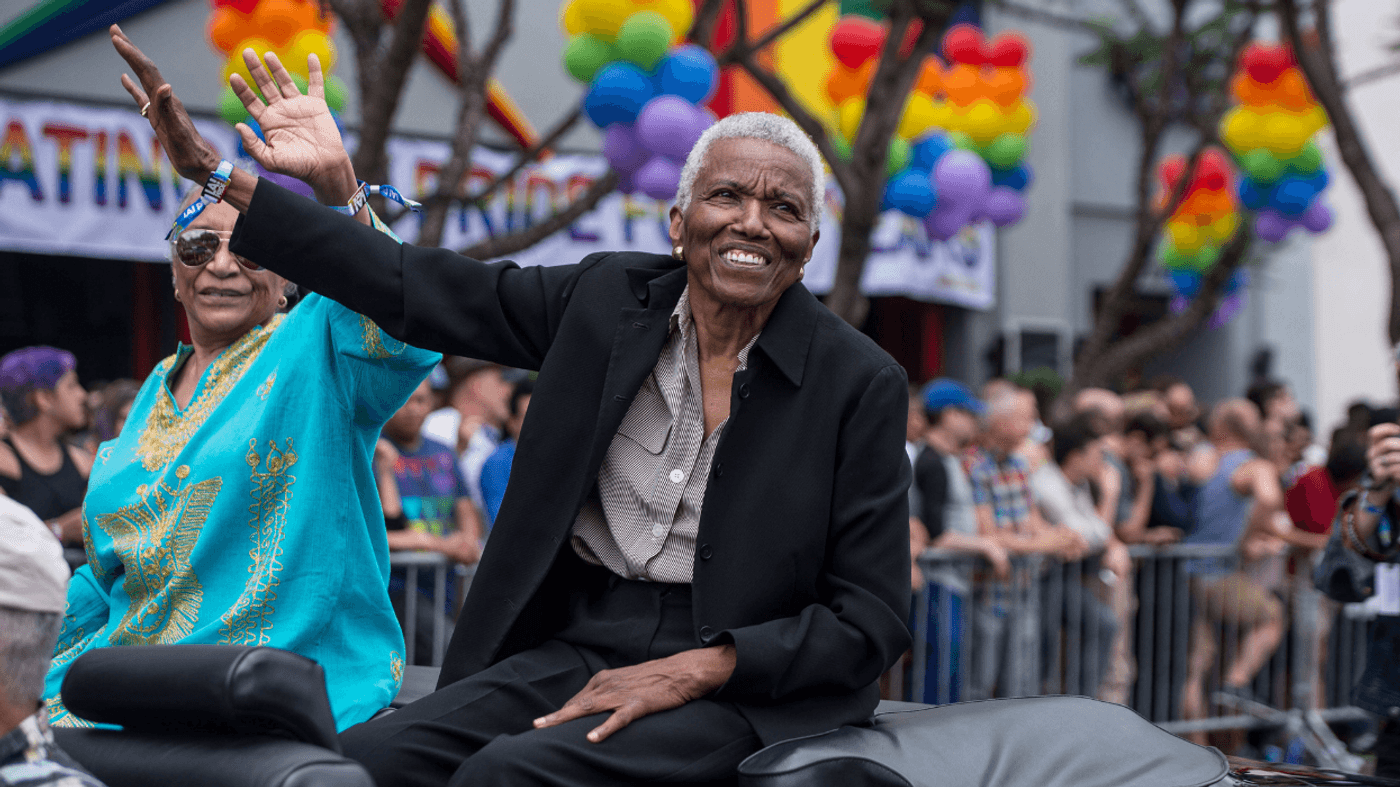
Note: The photo is of the late Jewel Thais-Williams (on the right) with her wife Rue on her left. Ms. Thais-Williams (May 9, 1939 – July 7, 2025) was a businesswoman and activist based in Los Angeles, the original owner of “Jewel’s Catch One” nightclub, and the first black woman in the United States to own a LGBTQ nightclub